

Pilot Project at Altmühlsee: Testing Sediment Removal and Phosphorus Reduction in the Lake
Altmühlsee is a significant recreational and water management site in Bavaria. However, like many similar bodies of water in Europe, it faces a long-standing issue: gradual sedimentation, which reduces the lake’s capacity and negatively impacts water quality.
Over the years, hundreds of thousands of cubic meters of sediment have accumulated in the lake. Moreover, this material is rich in phosphorus, creating conditions that foster the growth of cyanobacteria and lead to a deterioration of the ecological status. Despite regular interventions on a smaller scale, the problem requires a systemic solution.
It was in this context that a pilot project was launched, with the participation of PROGROUPE sediment removal a.s. . The goal was not merely a one-off cleanup of the lake, but rather to verify the existence of a technological approach that could be applied on a large scale without significantly disrupting operations—while simultaneously analyzing the actual environmental benefits.
The project was conducted under real-world conditions and encompassed the entire process, from the actual extraction to sediment processing. The pilot phase involved a volume of approximately 1,500 m³ of sediment, allowing the technology to be tested under conditions closely resembling a full-scale operation.
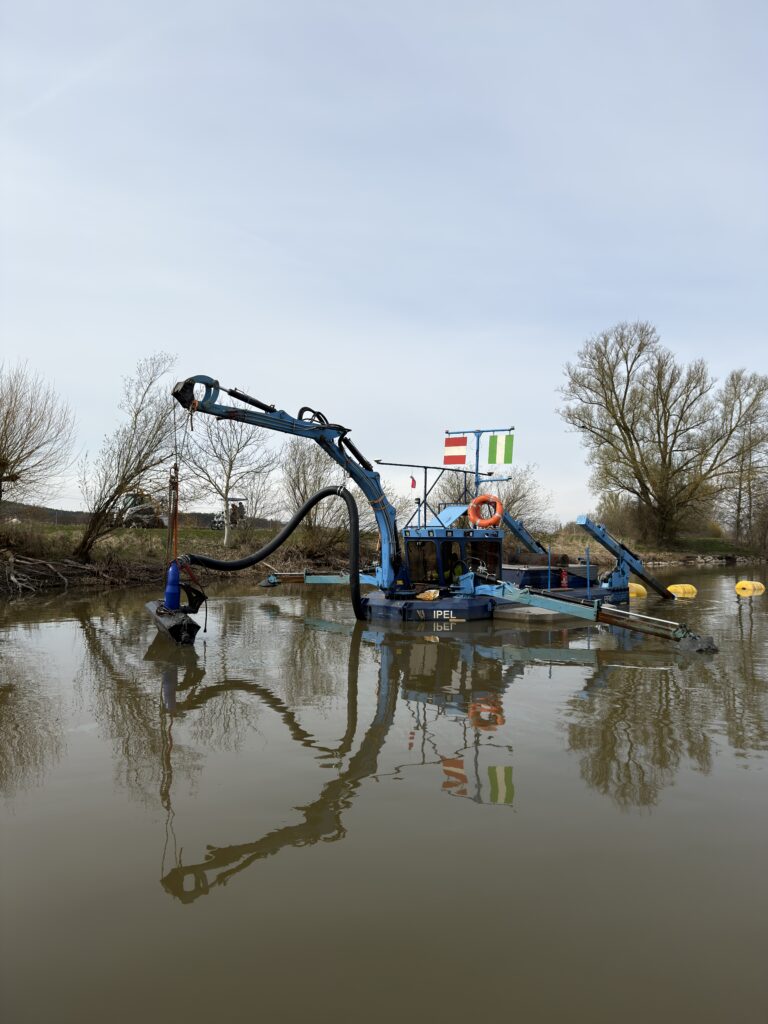
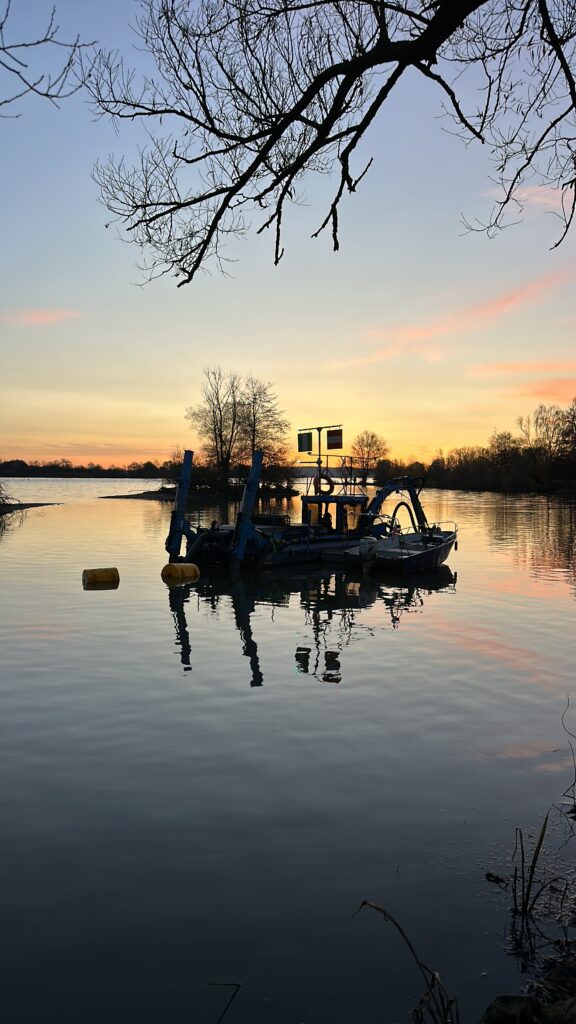
A suction dredger was deployed, enabling continuous sediment removal without the need to drain the water. The resulting mixture of sediment and water was then transported via pipeline to a processing site, where it was dewatered using PROGROUPE’s proprietary DESET (DEwatering SEdiment Technology) system. This technology is designed to efficiently separate water from the solid phase directly at the project site.
However, the extraction process itself was not the only key component of the project. The pilot also focused on testing ways to reduce the phosphorus content in the water reservoir, as phosphorus is a primary factor promoting the growth of cyanobacteria.
The pilot project results demonstrated that a significant portion of the phosphorus was bound within the dredged sediment, confirming the hypothesis that its removal could directly improve water quality.
In addition, other important parameters—such as turbidity, pH, and various physicochemical indicators of the water and sediment—were monitored throughout the project’s implementation. The project also involved testing for the presence of other substances that could affect water quality and influence options for the subsequent processing of the sediment.
This analytical component of the project was crucial. In practice, simply removing the sediment is insufficient; understanding its composition and its impact on the aquatic ecosystem is the decisive factor.
At the same time, it was once again confirmed that one of the primary limiting factors in such projects is not the dredging itself, but the processing of the sediment. High water content significantly increases the material’s volume, thereby driving up costs for transport and subsequent handling. Consequently, the ability to dewater the sediment directly on-site represents a vital step toward a more efficient solution.
The Altmühlsee project thus represents not merely an isolated intervention, but a model example of a comprehensive approach combining dredging, processing, and analytical assessment. Such an approach is essential when dealing with large volumes of sediment.
Experience from the pilot project demonstrates that the key to an effective solution lies not just in the dredging itself, but in the ability to optimize the entire process as a single, functional system—with a focus on both environmental impact and economic sustainability.